
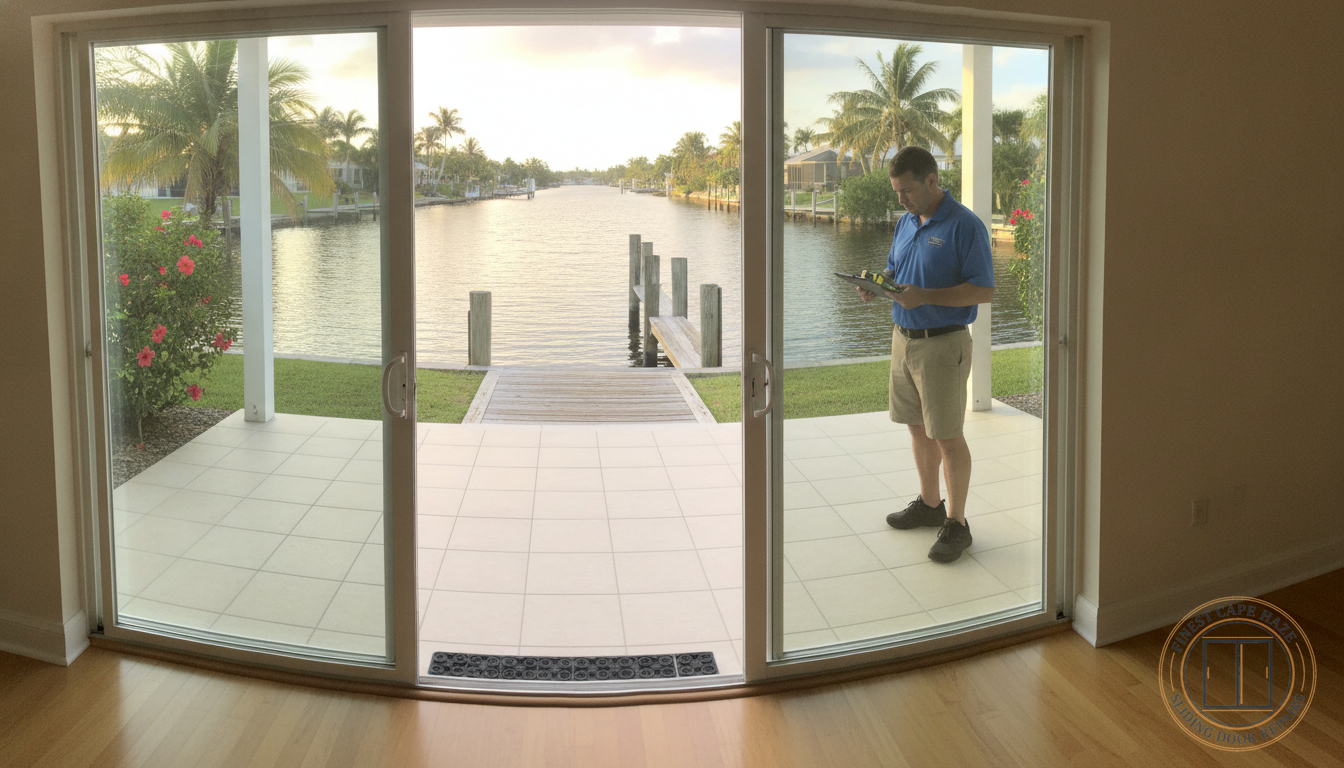
Why Coastal Sliding Doors Need More Attention Than Most Homeowners Realize
A sliding door on a Cape Haze waterfront property is essentially a precision mechanical system operating in one of the harshest environments a residential door can face. Salt air deposits on metal hardware and accelerates corrosion. UV radiation degrades seals, nylon components, and screen mesh. Sand carried by Gulf breezes packs into track channels and acts as an abrasive against rollers and frames. Summer storms drive rain horizontally against door edges, testing every seal in the system. And through all of this, most homeowners expect their sliding door to operate effortlessly for years with minimal attention.
That expectation is achievable — but only with a clear understanding of what each component does, how it fails, and what a reasonable maintenance schedule looks like in a coastal Florida environment. This guide walks through the full sliding door system, component by component, from the perspective of the technicians at Finest Cape Haze Sliding Door Repairs who service these doors daily across Cape Haze, Placida, Gasparilla Island, and the broader Charlotte County Peninsula.
The Track: Your Door's Foundation
The track is the channel mounted at the floor threshold that guides your door's rollers from the fully open position to the closed position and back. On waterfront homes, the track faces direct salt spray, standing water after rain, and constant sand infiltration. Aluminum tracks — the most common material in residential sliding doors — develop surface pitting and channel distortion when salt corrosion is left unaddressed. Steel tracks rust. Either type, once deformed, creates friction, noise, and eventually causes the rollers to jump out of the channel entirely.
What to do: Rinse the track with fresh water monthly and after every significant storm. Use a narrow brush (an old toothbrush works well) to clear compacted sand from the channel corners. Dry the track after cleaning and apply a silicone-based lubricant — not petroleum-based products, which attract dust and build up into a gritty paste over time. Schedule a professional track inspection annually; technicians can identify early-stage corrosion and address it before the channel deforms.
When the track has progressed beyond what maintenance can address, our sliding door track repair and replacement service provides a matched replacement track and a full roller inspection to protect the new hardware. We serve homeowners throughout the Cape Haze area, including Rotonda West and Rotonda, with track services that account for the specific corrosion patterns common to coastal Charlotte County.
The Rollers: The Workhorses Nobody Sees
Rollers ride inside the track channel and carry the entire weight of your door panel — which on an impact-rated sliding door can exceed 200 pounds — through thousands of open-and-close cycles per year. Most residential sliding door rollers use a nylon wheel on a steel bearing axle. The nylon degrades under UV exposure and develops flat spots from sustained load; the bearings corrode and seize in salt-air environments. When either happens, the door starts dragging, lifting, or grinding with every use.
What to do: Pay attention to how your door feels. A door that suddenly requires noticeably more effort to open, or that you instinctively lift as you push, is communicating roller wear. Don't ignore that signal. Continuing to force a door with failing rollers gouges the track — turning a roller-only repair into a roller-and-track repair. Our sliding door roller replacement service is the most common service we perform across Cape Haze, Grove City, and Englewood Beach precisely because waterfront conditions shorten roller life considerably compared to inland homes.
After any roller replacement, the technician should adjust the height-set screws to position the panel correctly in the frame — this is critical for weatherseal performance and lock alignment. Our technicians torque those screws to spec and verify the full range of door travel before completing any roller job.
The Lock and Handle: Security and Alignment in One Assembly
The lock on a sliding door serves two purposes that most homeowners don't consciously separate: it secures the door against forced entry, and it pulls the door panel tightly into the frame to create a complete weatherseal. A lock that doesn't engage fully leaves a gap at the latch point that lets air and insects through even if the rest of the door is sealed perfectly. A handle that's cracked or loose makes daily operation awkward and can eventually damage the door stile it's mounted in.
Salt-air corrosion is hard on lock mechanisms because the hook-bolt spring and internal cam components are small steel parts that experience continuous exposure through the gap in the door stile. Handles crack from UV brittleness and from years of firm daily use. Strike keepers shift when the door frame settles or when the door panel sags slightly from roller wear, preventing the bolt from seating fully.
What to do: Test your lock monthly by closing the door firmly and confirming the latch engages and holds without lifting or forcing the panel. Any springiness, failure to engage, or handle wobble warrants a service call. Our sliding door lock and handle repair team carries hook-bolt assemblies, keyed cylinders, flush-pull handles, and strike keepers for the most common door brands throughout Southwest Florida. We also evaluate door alignment during every lock service, because a sagging door will destroy a new lock within months if the underlying cause isn't addressed.
Weatherstripping and Seals: Your Home's First Line of Defense Against the Elements
Weatherstripping is the most overlooked component on most sliding doors until the AC bill arrives or bugs start getting through. The seals that run along the side jambs, top header, and bottom threshold of your sliding door are made from foam, vinyl bulb, or pile brush material — all of which degrade faster in Cape Haze than in cooler, less UV-intense environments. Once those seals compress, crack, or pull away from their channels, every storm and onshore wind becomes an opportunity for moisture, humid air, and insects to enter your home.
What to do: Do the smoke or tissue test described by our technicians: close the door on a breezy day and hold a lit incense stick or thin tissue near the door edges. If it moves, air is coming through and the seal is compromised. Visible cracking or flattening of the seal material is also a clear indicator. Our sliding door weatherstrip and seal replacement service addresses the full perimeter — not just the most obvious failing section — using materials rated for prolonged Florida UV and heat exposure. We also inspect the bottom sweep and threshold seal, which are frequently missed contributors to infiltration.
Proper seals also support your home's energy efficiency. Cape Haze's cooling season runs roughly from April through October, and a sliding door with failed weatherstripping can add meaningfully to your monthly utility costs as conditioned air escapes and humid outside air infiltrates.
The Glass Panel: Clarity, Safety, and Thermal Performance
The glass panel is the most visible component of your sliding door, and its condition directly affects your home's safety, appearance, and energy performance. In coastal Florida, the two most common panel failures we see are impact damage — from storms, debris, or accidental breakage — and insulated glass unit (IGU) seal failure, which produces the cloudy, fogged appearance between the panes that no amount of exterior cleaning can fix.
Many homes in Cape Haze and on nearby Gasparilla Island were built or retrofitted with impact-rated laminated glass panels. If your home has this requirement and the panel cracks or the IGU seal fails, a standard clear glass replacement is not the right solution — you need a laminated impact panel that meets the original specification. Our sliding glass door panel replacement service confirms the correct glass spec during our site assessment before any panel is ordered, ensuring the replacement meets both your door frame dimensions and any applicable impact requirements.
What to do: Inspect your glass panels seasonally for chips, cracks, and the early milky haze that indicates a failing IGU seal. Address cracks promptly — even a small chip can propagate into a full break under the thermal expansion and contraction cycles that Florida's temperature swings produce. A fogged panel won't get better on its own; schedule a replacement before the failed IGU leads to moisture damage in the door frame.
The Screen Door: The Overlooked Final Layer
The sliding screen door is the last line of defense between Cape Haze's outdoor air and your interior, and it takes more daily abuse than any other door component. Frames bend from impact, mesh tears from pets and debris, rollers wear out from constant light use, and top-rail guides fail — causing the door to pop off track and fall. Standard fiberglass insect screen also degrades from UV exposure, becoming brittle and prone to tearing within a few years in a full-sun Florida exposure.
What to do: Check screen door rollers annually and replace them proactively if they feel rough or uneven. If you have pets, consider upgrading to pet-resistant mesh during your next screen door service — it's significantly more resistant to claw punctures and still provides excellent airflow and visibility. Our sliding screen door repair and replacement service covers everything from mesh restringing to complete frame replacement, and we carry the hardware to complete most screen door repairs in a single visit without parts delays. We also check the shared track surface during every screen door job to make sure track condition isn't the underlying cause of derailment.
Building a Maintenance Schedule That Works for Cape Haze Conditions
- Monthly: Rinse track channels with fresh water. Clear sand and debris from track corners. Wipe down exposed metal hardware. Test lock engagement.
- Quarterly: Apply silicone lubricant to track and roller path. Inspect weatherstripping for cracking or pull-away. Test door operation for unusual noise or resistance.
- Annually: Schedule a professional inspection covering track condition, roller wear, lock hardware, weatherstripping integrity, glass panel condition, and screen door operation. Catching one developing issue early almost always prevents two or three from compounding by the following season.
- After major storms: Rinse all salt and debris from tracks and hardware immediately. Inspect seals and glass for storm damage. Test lock engagement after any significant frame flex.
We're Here Every Day of the Week
Finest Cape Haze Sliding Door Repairs serves homeowners throughout the Cape Haze Peninsula and surrounding Charlotte County communities Monday through Sunday, 8 AM to 6 PM. Whether you need a quick roller swap, a complete weatherstrip overhaul, or a fogged glass panel replaced before the next storm season, our technicians are ready to help at your Cape Haze, Placida, Rotonda West, Englewood Beach, or Grove City property. Call +1 (941) 415-6770 or email [email protected] to schedule your maintenance inspection or same-day repair service. Visit us at 7092 Placida Rd, Unit 3416, Cape Haze, FL 33946.
Discuss This With Our Team
Call +19414156770 or fill out our online form for a free, no-obligation quote.
Request Free Quote